
Porsche Performance Alignment in Tampa Explained
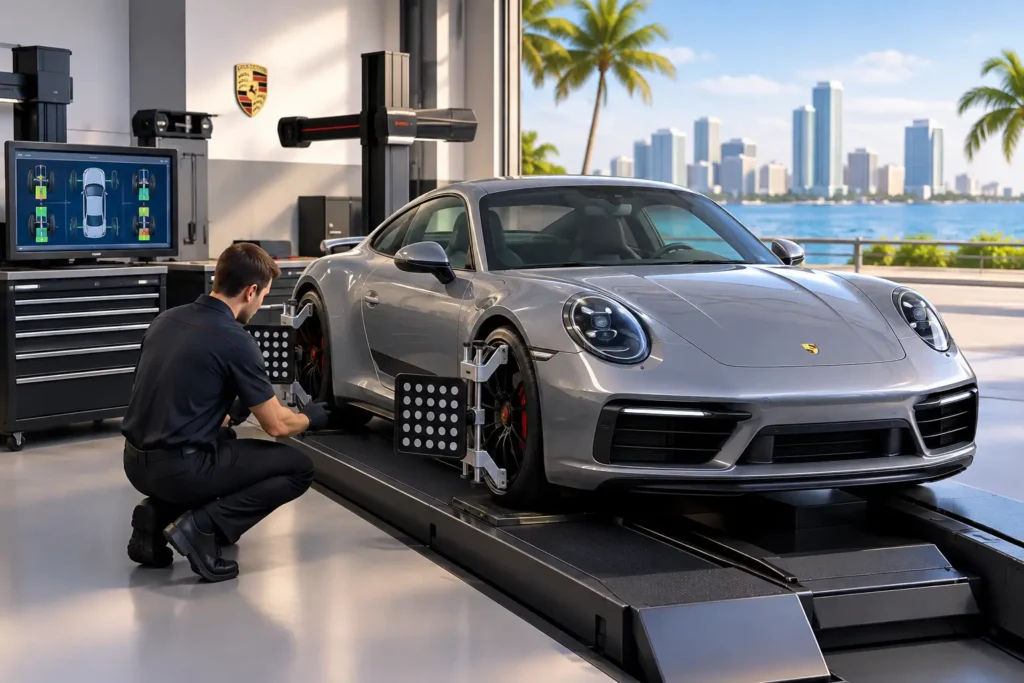
A Porsche can leave the shop with the steering wheel straight and still not be aligned for the way it was engineered to drive. That is the difference a proper Porsche performance alignment Tampa owners need can make. Alignment is not just about preventing a pull or saving a set of tires. It affects turn-in, braking stability, high-speed confidence, tire wear, and the connected feeling that makes a Porsche feel like a Porsche.
Tampa roads add their own challenges. Potholes, uneven pavement, construction zones, curb contact, and hard impacts can move alignment angles out of specification. Even a small change can show up at the steering wheel long before it looks dramatic on an alignment printout. For a daily-driven Macan or Cayenne, that may mean uneven tire wear and a vehicle that feels unsettled. For a 911, Boxster, Cayman, or Panamera, it can mean the car no longer tracks, turns, or communicates as crisply as it should.
Why Porsche Alignment Is Different
Every vehicle needs alignment, but a Porsche is more sensitive to it than most. Porsche suspension geometry is designed around precise settings for camber, caster, toe, ride height, wheel size, and intended use. A generic alignment approach may place the readings somewhere within a broad acceptable range without considering how those settings work together.
That is not enough for a vehicle built around handling balance. The goal is to set the car according to the applicable Porsche specifications and to understand what the measurements mean for your particular model, tires, suspension condition, and driving habits.
Camber is the inward or outward tilt of the tire when viewed from the front. More negative camber can help maintain tire contact during cornering, but too much can wear the inside edges of the tires. Toe is the direction the tires point relative to the vehicle centerline. Small toe changes can have a major effect on steering response and tire life. Caster influences straight-line stability and steering feel.
These settings are connected. Correcting one angle without evaluating the others can leave the vehicle technically improved but still not properly balanced. A specialist should also confirm that worn suspension parts, bent components, tire damage, or ride-height issues are not the real cause of the problem.
Signs Your Porsche Needs a Performance Alignment
Some alignment concerns are obvious, such as a vehicle pulling to one side. Others are much easier to miss until tires wear prematurely or the handling feels less predictable than it used to.
Pay attention if your Porsche has a crooked steering wheel while driving straight, wanders on the highway, feels nervous over road grooves, or requires frequent steering corrections. Uneven tire wear is another important warning. Inner-edge wear can point to excessive negative camber or toe concerns, while feathering across the tread often indicates toe is out of adjustment.
A change in behavior after a pothole strike, curb contact, suspension repair, wheel replacement, or lowering work deserves an inspection. The same applies after installing new tires. New tires are an investment, and alignment should help protect that investment from the first mile.
Drivers of performance models may notice more subtle clues. The car may feel reluctant to settle into a corner, less stable under braking, or slower to return to center after a turn. Those changes do not always mean alignment is the only issue, but they are worth diagnosing rather than ignoring.
What a Porsche Performance Alignment in Tampa Should Include
A quality alignment begins before the sensors are installed. Tires need to be inspected for condition, pressure, size matching, and irregular wear. Wheels should be checked for visible damage. If a tire is worn unevenly because of an existing alignment issue, simply adjusting the vehicle will not restore the tire's lost shape or ride quality.
The suspension also needs a close inspection. Control arm bushings, ball joints, tie rods, wheel bearings, springs, struts, shocks, and mounting hardware all affect the accuracy and durability of an alignment. On a vehicle with worn components, numbers can be adjusted on the rack but shift again once the Porsche is driven.
Ride height matters as well. Many Porsche models use suspension designs in which alignment geometry changes as ride height changes. A sagging spring, incorrectly installed component, or modified suspension can alter the baseline. Cars equipped with air suspension may require proper vehicle setup and model-specific procedures before measurements are meaningful.
From there, a technician should use alignment equipment that can accurately measure all four wheels and follow the correct adjustment sequence for the model. The final readings should be reviewed, not treated as a mystery. Clear communication matters: you should understand what was found, what was adjusted, and whether any component condition could affect the result.
At Fox Motors Bimmer Specialists, the approach is built around marque-specific service rather than one-size-fits-all repair. That means looking beyond a green reading on a screen and focusing on the steering feel, tire condition, suspension health, and factory-oriented specifications that support dependable Porsche performance.
Factory Specifications Versus Performance Settings
For most Tampa Porsche owners, factory alignment specifications are the right starting point. They are designed to balance handling, tire life, ride quality, and safety for street use. A properly set factory-oriented alignment is usually the best choice for a commuting Cayenne, a family Macan, or a 911 that sees occasional spirited weekend driving.
Performance-oriented settings can make sense in certain cases, but they involve trade-offs. A track-focused 718 Cayman or 911 may benefit from additional negative camber to improve cornering grip and reduce outer-edge tire wear under hard loading. That same setting can accelerate inner-edge wear during daily highway use. More aggressive toe settings may sharpen response, but they can also reduce tire life and make the vehicle feel less settled on imperfect roads.
The right alignment depends on how you actually use the car. A street-driven Porsche with premium tires needs a different conversation than a vehicle prepared for track days. Be direct about your goals. The best result is not the most aggressive number available. It is the setup that makes sense for your Porsche, your tires, and your driving.
Alignment After Suspension or Tire Work
Alignment should be part of the plan after repairs or upgrades that affect wheel position and suspension geometry. Replacing control arms, tie rods, struts, springs, wheel bearings, steering components, or adjustable suspension parts can all require a follow-up alignment. On some models, even a modest impact can bend a component enough to limit adjustment range.
After lowering a Porsche, alignment becomes especially important. Lower ride height can increase negative camber and change toe angles. The result may look great in the driveway but wear tires quickly if the geometry is not corrected where adjustment allows. A knowledgeable inspection can also identify when additional parts or adjustments are needed to achieve the desired settings safely.
Tire replacement is another smart time to check alignment. There is no benefit in mounting expensive new tires onto a vehicle that has been wearing the old set unevenly. If the previous tires show unusual wear, bring that information to the appointment. It gives the technician useful clues about what has been happening at each corner of the vehicle.
How Often Should You Schedule Alignment Service?
There is no single mileage interval that fits every Porsche. Many owners benefit from having alignment checked annually, particularly if the vehicle is driven regularly on Tampa Bay roads. It should also be checked whenever handling changes, after an impact, following suspension work, or when uneven tire wear appears.
Performance cars, vehicles with low-profile tires, and cars driven on rough roads may need more frequent attention. On the other hand, a Porsche that tracks straight, shows even tire wear, and has not experienced impacts may not require an adjustment at every routine service visit. Inspection and measurement should guide the decision.
The important point is to address concerns early. Tires can wear out quickly once toe is significantly out of specification, and worn tires can mask the improvement a correct alignment would otherwise deliver.
A Porsche should feel composed, direct, and easy to place on the road. If yours feels different, do not assume that is simply part of owning a performance vehicle. A careful alignment inspection can protect your tires, restore the confidence behind the wheel, and help keep every drive feeling like the Porsche engineers intended.