
When Does Porsche PDK Transmission Service Matter?
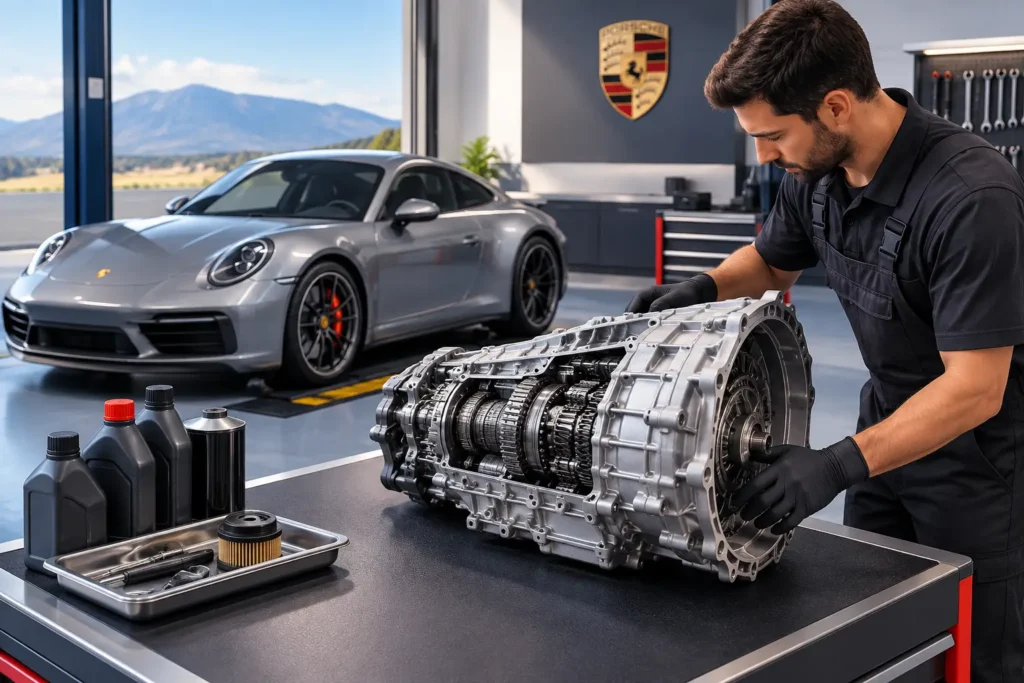
A Porsche PDK transmission service is easy to postpone when the car still feels quick, smooth, and completely normal. That is precisely why it deserves attention. PDK transmissions are engineered for rapid, precise shifts, but their clutches, hydraulic circuits, fluid, filters, electronics, and cooling all work under significant heat and pressure. Proper service is preventive care that helps preserve the responsive driving experience you bought the Porsche for.
For Tampa Bay owners, heat, stop-and-go traffic, short trips, and enthusiastic driving can all add stress to transmission fluid over time. A PDK does not need generic transmission-shop treatment. It needs the correct procedure, the correct fluid specification, and a technician who understands how Porsche systems behave when something is beginning to change.
What PDK Service Actually Addresses
PDK stands for Porsche Doppelkupplung, or dual-clutch transmission. Rather than operating like a conventional automatic with a torque converter, it uses two clutches and two gear sets. While one gear is driving the car, the next appropriate gear can be prepared in advance. That is a major reason PDK-equipped Porsches shift so quickly and deliver such direct performance.
This design also means the transmission depends on clean, correctly specified fluid and accurate fluid level control. The fluid supports lubrication, cooling, hydraulic operation, and clutch function. As it ages, heat cycles and normal wear can reduce its ability to protect internal components as intended.
A proper service may include draining and replacing the specified transmission fluid, replacing applicable filters or service components, inspecting for leaks, and resetting or documenting service information as appropriate for the model. The exact work is not identical across every Porsche. A 911, Boxster, Cayman, Macan, Cayenne, and Panamera can have different service requirements based on model year, drivetrain configuration, and transmission version.
That is why a one-price, one-procedure transmission flush is not a sensible substitute for model-specific Porsche maintenance.
When Should You Schedule Porsche PDK Transmission Service?
The best answer comes from your Porsche’s maintenance schedule, VIN-specific information, and service history. Porsche intervals can differ substantially by model and year. Some PDK applications have service milestones based on mileage and time, while others have different requirements. If you purchased a pre-owned Porsche and cannot verify prior transmission service, establishing a baseline inspection is often a smart first move.
Do not wait for a warning light to begin the conversation. By the time a transmission fault is obvious, the vehicle may need diagnosis and repair rather than routine maintenance.
Service timing can also depend on how the vehicle is used. A Porsche that sees track events, frequent hard acceleration, heavy traffic, high ambient temperatures, towing where permitted, or regular mountain driving may benefit from closer attention than a lightly driven weekend car. Conversely, low mileage alone does not always mean fluid has avoided aging. Time matters because moisture, temperature cycles, and long periods of limited use affect fluids and seals differently.
At Fox Motors Bimmer Specialists, the goal is not to sell service by assumption. It is to review the vehicle’s records, inspect its condition, and recommend the work that fits your specific Porsche.
Signs Your PDK Needs Attention
A well-maintained PDK should feel decisive and refined. Some shift character can vary by driving mode, temperature, and low-speed conditions, especially when cold. Still, a new or worsening change deserves professional evaluation.
Pay attention if you notice delayed engagement when selecting Drive or Reverse, hesitation before acceleration, harsh or inconsistent shifts, shuddering, unusual whining, a transmission warning message, or fluid spots beneath the vehicle. A burning odor after normal driving, repeated limp-mode behavior, or an inability to select a gear should be addressed promptly.
These symptoms do not automatically mean the transmission has failed. A concern can be related to fluid condition, a seal leak, a sensor, software, adaptation values, a mechatronic component, or another system affecting drivability. Accurate diagnosis matters because replacing parts without confirming the cause is expensive guesswork.
Why the Correct Procedure Matters
PDK fluid service is not just a drain plug and refill. Fluid level may need to be set within a specific temperature range, using proper diagnostic equipment to monitor transmission data. The vehicle must be level, the correct fluid must be used, and the technician must follow the procedure for that Porsche’s transmission.
Overfilling and underfilling both create problems. Incorrect fluid can compromise clutch operation and hydraulic performance. Skipping required filters, seals, or inspection steps can turn a maintenance visit into a repeat visit. This is where Porsche-focused experience protects both the car and your budget.
A qualified shop should also inspect the transmission area for leaks and related concerns. On some vehicles, what appears to be a transmission issue may involve a mount, cooling system component, axle, transfer case, or engine issue that changes how the vehicle feels. Looking at the complete driveline helps avoid narrow diagnoses.
What to Expect From a Specialist Visit
A good appointment begins with a conversation. Share when the concern occurs, whether it happens cold or warm, which drive mode you use, and whether the vehicle has been tracked or recently serviced. Those details help narrow the diagnostic path before anyone reaches for a part.
The technician should confirm the model-specific maintenance requirement, scan for stored faults, inspect the vehicle, and explain what is recommended before work begins. If service is due and no faults are present, the focus is straightforward preventive maintenance. If there are symptoms or fault codes, diagnosis should come first. Performing routine fluid service will not correct every electronic or mechanical issue, and a reputable shop will be clear about that distinction.
After service, your records should show what was performed and when. That documentation is useful for future maintenance planning and can support resale value when it is time to sell or trade your Porsche.
Protecting Performance Between Services
There is no need to baby a PDK-equipped Porsche, but thoughtful operation helps. Let the vehicle complete its warm-up period before demanding full performance. Address cooling system problems quickly, because transmission temperature management matters. Avoid ignoring leaks or warning messages, even if they appear intermittent.
It also helps to keep up with engine, differential, transfer case, brake, and cooling maintenance. Porsche systems work together. Fresh transmission fluid cannot compensate for a driveline vibration, weak battery voltage, overheating concern, or neglected suspension component that changes the way the vehicle performs.
If your Porsche has been sitting for months, do not assume a short drive is enough to confirm everything is healthy. A pre-drive inspection and a review of age-based maintenance can be a better investment than discovering a problem on the first long trip.
A Note on Fluid Changes and “Flush” Services
Owners often hear the word “flush” used for every type of transmission maintenance. It is worth asking exactly what that term means. The right approach is the procedure specified for your transmission, not a universal machine service marketed for every make and model.
There can be trade-offs. A vehicle with unknown history, active shifting problems, or significant fault codes may need diagnostic testing before fluid service is authorized. In some cases, a service can reveal an existing problem that old fluid was masking. That does not mean the service caused the issue. It means the transmission already needed a closer look, which is why condition assessment and clear communication matter.
Your Porsche was built to make precise, confident driving feel effortless. Keeping the PDK maintained with the right parts, diagnostic process, and service interval is one of the most practical ways to preserve that feeling for the miles ahead.