
What Your Porsche Oil Change Really Requires
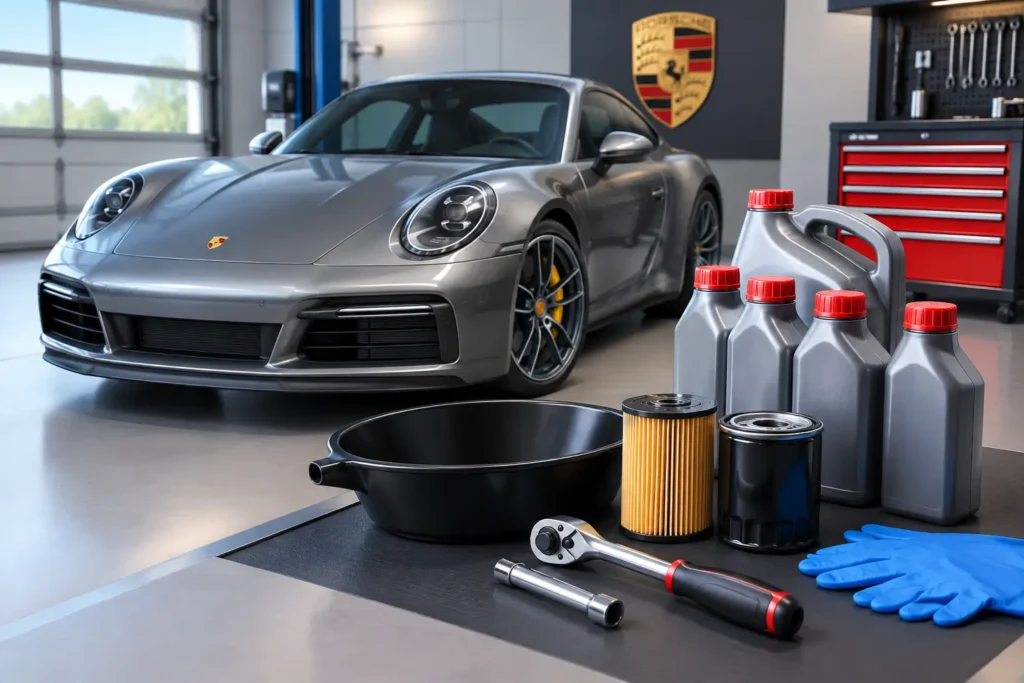
A Porsche oil change is not a quick-lube item. The correct oil, exact fill level, proper filter, service reset, and a trained inspection all matter because Porsche engines are built to tight tolerances and often operate under serious heat. Whether you drive a Macan to work, a Cayenne with the family, or a weekend 911, routine oil service is one of the most effective ways to protect the driving experience you bought the vehicle for.
Why Porsche Oil Service Deserves More Attention
Engine oil does more than keep moving parts slippery. It carries heat away from high-load components, helps control deposits, protects internal surfaces from wear, and supports hydraulic systems such as variable valve timing. On many modern Porsche engines, it also works in conditions that are tougher than owners may realize: turbocharger heat, stop-and-go traffic, short trips, and Florida temperatures all add stress.
That does not mean every Porsche needs an oil change at the same mileage. Factory maintenance schedules are a starting point, not a substitute for considering how the vehicle is used. A lightly driven 718 that spends much of its time in the garage has different needs than a Cayenne that idles in Tampa traffic, tows occasionally, or makes frequent short trips. A 911 that sees track days needs a more conservative service plan than one driven gently on weekends.
The goal is not to sell unnecessary maintenance. It is to choose an interval and oil specification that make sense for your Porsche, its engine, its age, and the way you drive it.
When Should You Schedule a Porsche Oil Change?
Many late-model Porsches have manufacturer-recommended oil service intervals around one year or 10,000 miles, depending on the model and model year. Earlier vehicles may have different schedules. Your owner’s manual and service reminder provide the baseline, but severe-use conditions can justify changing oil sooner.
In Tampa Bay, heat is a practical reason to pay attention. High ambient temperatures raise operating demands, especially when combined with heavy traffic and air-conditioning use. Repeated short trips are another factor. If the engine does not reach full operating temperature for long enough, moisture and fuel dilution can remain in the oil rather than burning off as intended.
Consider a shorter interval if your Porsche sees frequent spirited driving, track use, towing, extended idling, heavy city driving, or very low annual mileage. Time matters even when miles do not accumulate quickly. Oil can absorb moisture and contaminants while a vehicle sits, and seals, hoses, tires, and batteries also deserve a regular look.
If the oil-level warning appears, do not assume it means an oil change is due. Porsche electronic oil-level measurement systems can be precise, but the reading must be taken under the correct conditions. Low oil may indicate normal consumption, an external leak, or another concern that should be evaluated. Adding oil without confirming the correct specification and level can create its own problems.
Do Not Rely on Oil Color Alone
Dark oil is not automatically bad oil. Detergents in modern engine oil suspend contaminants, which can make oil darken quickly. Conversely, oil that looks clean may still be past its time interval or may not provide the protection required under high heat.
A professional service considers mileage, time, vehicle use, service history, warnings, fluid level, and any signs of leaks or consumption. That is far more useful than judging the oil by appearance on a dipstick or dashboard reading alone.
The Right Oil Is More Than the Right Viscosity
Seeing 0W-40, 5W-40, or 0W-30 on a bottle does not guarantee that oil belongs in your Porsche. Viscosity is only one part of the requirement. Porsche engines may require a specific manufacturer approval, and that approval confirms performance standards beyond the number printed on the front label.
The correct oil depends on the engine, model year, emissions equipment, and Porsche-approved specification listed for that vehicle. Using an oil that is close but not approved can affect protection, deposit control, oil consumption, and long-term component life. This is particularly relevant on turbocharged engines and newer vehicles with sophisticated emissions systems.
A specialist should verify the vehicle identification information and service specifications before selecting oil. The filter matters too. A quality OEM or OEM-equivalent filter is designed to fit correctly, maintain appropriate filtration, and work with the engine’s oil pressure and flow needs. Saving a small amount on generic materials is a poor trade when the engine itself is a major investment.
What a Proper Porsche Oil Change Should Include
A complete service should begin with confirming the correct oil and filter for the vehicle, then draining and refilling the engine according to the proper procedure. On some models, accessing the filter or drain points requires removing underbody panels. Those panels should be reinstalled correctly, not rushed or left with missing hardware.
The technician should check for seepage around the engine, filter housing, drain area, oil lines, and accessible gaskets. A minor oil film and an active leak are not the same thing, and a clear explanation helps owners decide what needs attention now versus what can be monitored.
After service, the oil level should be verified using the applicable Porsche procedure. That can require the vehicle to be level, warmed up, and allowed to sit for a specified period. The maintenance reminder should also be reset correctly, and the service record should document the oil used, the specification, the quantity, and the next recommended interval.
A good appointment is also an opportunity for a courtesy inspection. Brake pad condition, tire wear, coolant level, battery health, suspension concerns, fluid leaks, and warning messages can often be identified before they become a roadside inconvenience or a larger repair. For performance cars, tire condition and alignment wear patterns deserve special attention. An oil service may be routine, but it is still time with the vehicle on a lift and should be used wisely.
Common Mistakes Porsche Owners Can Avoid
The most common issue is waiting for a warning light rather than following the maintenance schedule. By the time an oil-pressure warning appears, the concern may be more serious than routine service. Oil-level warnings also require prompt, informed attention, not guesswork.
Another mistake is using a universal quick-lube approach. Porsche vehicles often have specialized access procedures, underbody protection, electronic service indicators, and model-specific fluid requirements. A shop that works with Porsche systems every day is more likely to recognize a developing issue and less likely to make a costly error with oil selection, fill level, or reset procedures.
Owners should also avoid topping off with whatever oil is available in the garage. If oil needs to be added between services, use the exact approved specification and add small amounts. Overfilling can cause foaming, elevated crankcase pressure, leaks, and potential damage to emissions-related components. If your Porsche repeatedly needs oil, document the amount and mileage, then have the pattern assessed.
Finally, do not ignore the service history when buying a pre-owned Porsche. Consistent oil services performed with the right materials are meaningful evidence of care. They support resale value and give the next owner more confidence in the vehicle. Gaps in records do not always mean a problem, but they are worth discussing before purchase or before setting a baseline maintenance plan.
Specialist Service That Respects Your Time
At Fox Motors Bimmer Specialists, Porsche oil service is handled as preventive care, not a rushed transaction. The right oil and OEM-oriented parts are only part of the job. Clear estimates, knowledgeable communication, and an inspection that gives you useful information are just as important. For busy Tampa owners, appointment scheduling, after-hours key drop-off, text updates, and available loaner vehicles can make necessary maintenance easier to fit into real life.
If your Porsche is due by time, mileage, or driving conditions, schedule service before the dashboard reminder becomes an afterthought. A properly performed oil change is one of the simplest ways to keep the engine smooth, responsive, and ready for the next drive.