
When Does a Porsche IMS Bearing Need Inspection?
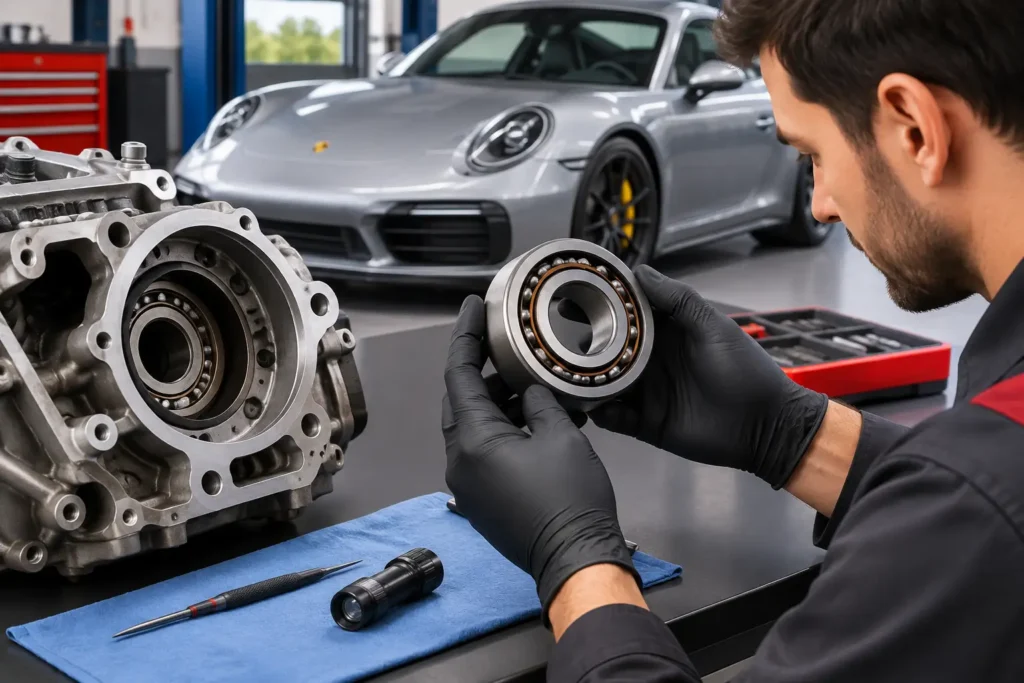
A Porsche IMS bearing inspection is not a routine oil-change add-on, and it should never be sold as a scare tactic. For the right Porsche, however, it is a smart conversation to have before a small, hidden component has the chance to create severe engine damage. The key is identifying whether your car is in the affected range, understanding its actual history, and choosing an inspection approach that fits how you use the vehicle.
The IMS bearing has become one of the most discussed subjects among owners of water-cooled Porsche 911, Boxster, and Cayman models. There is plenty of conflicting information online, from claims that every car will fail to claims that the concern is completely overblown. The practical answer sits in the middle: not every engine has the same risk, but the consequences of a bearing failure can be serious enough that informed inspection and planning make sense.
What the IMS Bearing Does
IMS stands for intermediate shaft. On certain Porsche flat-six engines, the intermediate shaft helps drive the camshafts through timing chains. A bearing supports one end of that shaft. If the bearing deteriorates or fails, the engine's valve timing can be affected. In a worst-case failure, internal engine components can collide, turning a relatively contained repair opportunity into a major engine repair or replacement decision.
The concern most often applies to certain M96 and M97 engine applications used in Porsche models from roughly the late 1990s through the 2000s. That includes some 986 Boxsters, 996-generation 911s, 987 Boxsters and Caymans, and 997.1 911s. Exact applicability depends on the model year, engine, transmission, and original bearing design.
That distinction matters. Porsche used different IMS bearing configurations over the years. Early engines, later engines, and cars that have already received an updated bearing solution should not be treated as identical. A professional evaluation starts with the vehicle identification information, engine details, maintenance records, and a visual assessment of what can be verified.
When a Porsche IMS Bearing Inspection Makes Sense
The best time to consider inspection is often when the transmission is already being removed for clutch service. On a manual-transmission Porsche, access to the IMS area may be available once the transmission, clutch, and flywheel are removed. Combining the work can reduce duplicated labor compared with scheduling separate jobs later.
That does not mean every clutch replacement automatically requires an IMS bearing retrofit. The vehicle's model year, bearing type, mileage, service history, oil condition, and owner goals all matter. A low-mileage weekend car with well-documented service may call for a different approach than a recently purchased 911 with incomplete records.
An inspection is also reasonable when buying an older Porsche, especially if the seller cannot document prior engine or clutch work. A pre-purchase inspection cannot see every internal component, but it can identify clues that affect the purchase decision. Those clues may include oil leaks, clutch condition, abnormal engine noise, stored fault codes, service records, and signs of previous transmission removal or engine work.
For Tiptronic or PDK-equipped cars, the labor path and options differ from a manual car. Transmission removal may be more involved, and not every bearing configuration supports the same service procedure. This is where model-specific knowledge matters more than internet checklists.
Warning Signs Are Not Always Clear
One difficult part of IMS bearing concerns is that a failing bearing may not provide a clean, early warning. Some engines run normally until damage has progressed. Others may show metallic material in the oil filter, unusual debris during an oil service, oil seepage near the rear of the engine, or changes in engine noise. None of these signs alone confirms an IMS bearing problem.
Metal in the oil filter, for example, deserves careful investigation, but it can come from several sources. The same is true of an oil leak at the rear of the engine, which may be related to the rear main seal rather than the IMS bearing. Accurate diagnosis means inspecting the evidence, not replacing expensive parts based on one symptom or an alarming forum post.
What a Proper IMS Bearing Inspection Includes
A meaningful Porsche IMS bearing inspection begins before any major disassembly. The technician should confirm the exact model and engine configuration, review available maintenance records, check for previous bearing-related work, and discuss how the car is driven. A track-driven car, a daily driver in Tampa traffic, and a low-mileage collector car can have different maintenance priorities.
During routine service, an oil and filter inspection can provide useful information about engine condition. Technicians may look for unusual ferrous material, glitter-like debris, or fragments that warrant deeper investigation. Diagnostic scanning and a complete underbody inspection can also reveal related concerns that should be addressed while the vehicle is in the shop.
If transmission removal is justified by clutch service or a specific repair plan, the technician can inspect accessible components in the IMS area. Depending on the application, this may include evaluating the flange, checking for play or leakage, and determining whether an updated bearing solution is appropriate. The findings should be explained in plain language, along with the limits of what can and cannot be confirmed without further disassembly.
A good inspection does not promise that an engine is risk-free. It gives the owner a clearer decision based on the vehicle in front of them. That is far more useful than guessing from mileage alone.
Inspection, Replacement, or Monitoring?
There is no single answer for every Porsche owner. Some cars are strong candidates for proactive bearing service while the transmission is already out. Others may be better served with regular oil and filter inspections, documented maintenance, and a plan to revisit the question when clutch work becomes necessary.
Proactive service can offer peace of mind, particularly for owners who plan to keep an affected car for years. It also adds cost, and the right replacement option depends on the engine's design. Owners should understand the parts being proposed, why they fit that specific engine, what additional labor is involved, and whether related items such as the clutch, flywheel, rear main seal, or transmission mounts should be addressed at the same time.
Monitoring can be sensible when access would require substantial stand-alone labor and there are no warning signs. It is not the same as ignoring the issue. Keep oil changes consistent, retain service records, use quality oil appropriate for the engine, and ask for the used filter to be inspected when practical. A well-documented maintenance history also supports future resale value.
Avoid decisions based solely on mileage. Some failures have occurred at lower mileage, while many higher-mileage engines have performed reliably for years. Age, storage conditions, driving patterns, prior repairs, and engine configuration all contribute to the larger picture.
Choose a Shop That Knows the Differences
IMS work is not a place for generic repair-shop guesswork. The technician needs to understand Porsche engine generations, transmission removal procedures, clutch and flywheel evaluation, oil-debris diagnosis, and the differences between bearing designs. Just as important, the shop should be willing to say when a service is not needed yet.
At Fox Motors Bimmer Specialists, Porsche owners receive a clear assessment of what applies to their specific vehicle, what can be inspected during routine service, and what makes financial sense if the transmission is already out. The goal is to help you protect the car without selling unnecessary work. You should receive a straightforward estimate, a realistic timeline, and an explanation of the repair choices before work begins.
If you own an older Boxster, Cayman, or 911 and are unsure about its IMS history, bring the records you have and ask the question before your next major service. A thoughtful inspection plan can turn an uncertain ownership issue into a manageable maintenance decision - and let you spend more time enjoying the drive.