
Why Are My Porsche Brakes Squeaking? When You Need Pads, Rotors, or Both
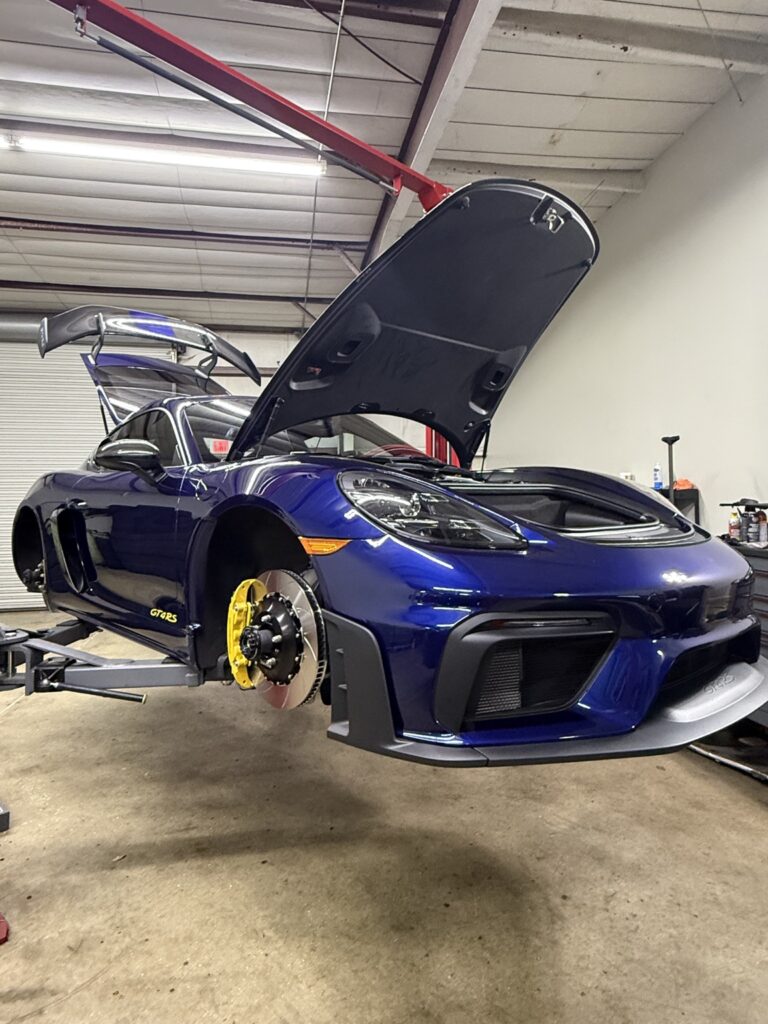
Maybe your brakes squeal on the first stop in the morning. Maybe they only make noise when you ease up to a traffic light. Or maybe the noise started after new pads were installed. The timing helps us narrow down the cause. When it’s time to replace the pads, we measure and inspect the rotors separately to decide whether they can stay on the car.
What makes Porsche brakes squeal?
Brake noise can change with the pad compound, rotor material, brake temperature, and weather. Porsche’s technical guidance notes that some combinations of speed, brake pressure, temperature, and humidity can produce squeal. At Fox Motors, we also look for wear, brake dust buildup, and debris caught where it can rub. A squeal under light pedal pressure and a scrape you hear even with your foot off the brake give us different clues. Porsche technical guidance on brake squeal
Can brake squeal be fixed without replacing the pads?
Sometimes. If the pads and rotors are still within specification and the inspection shows they’re suitable for reuse, we can remove the pads, clean them and the surrounding hardware, and apply brake lubricant to the specified contact points. Depending on the brake setup, we may lightly bevel the pad edges, a process called chamfering, and apply a compatible anti-squeal treatment formulated for the pad’s friction surface. Brake lubricant stays on the specified hardware contact points, away from the pad’s friction surface and rotor.
Can I replace the pads and keep the rotors?
Sometimes. We measure the rotor and compare it with the specification for the brake package on your Porsche. If the rotor meets the thickness requirements for reuse, we still inspect the friction surface and take any braking vibration into account.
If the pedal pulses or the steering wheel shakes during braking, one thing we check is disc thickness variation. A rotor can have enough thickness overall and still measure differently at points around the disc. If the variation exceeds specification and explains the vibration, we recommend replacing the affected rotors.
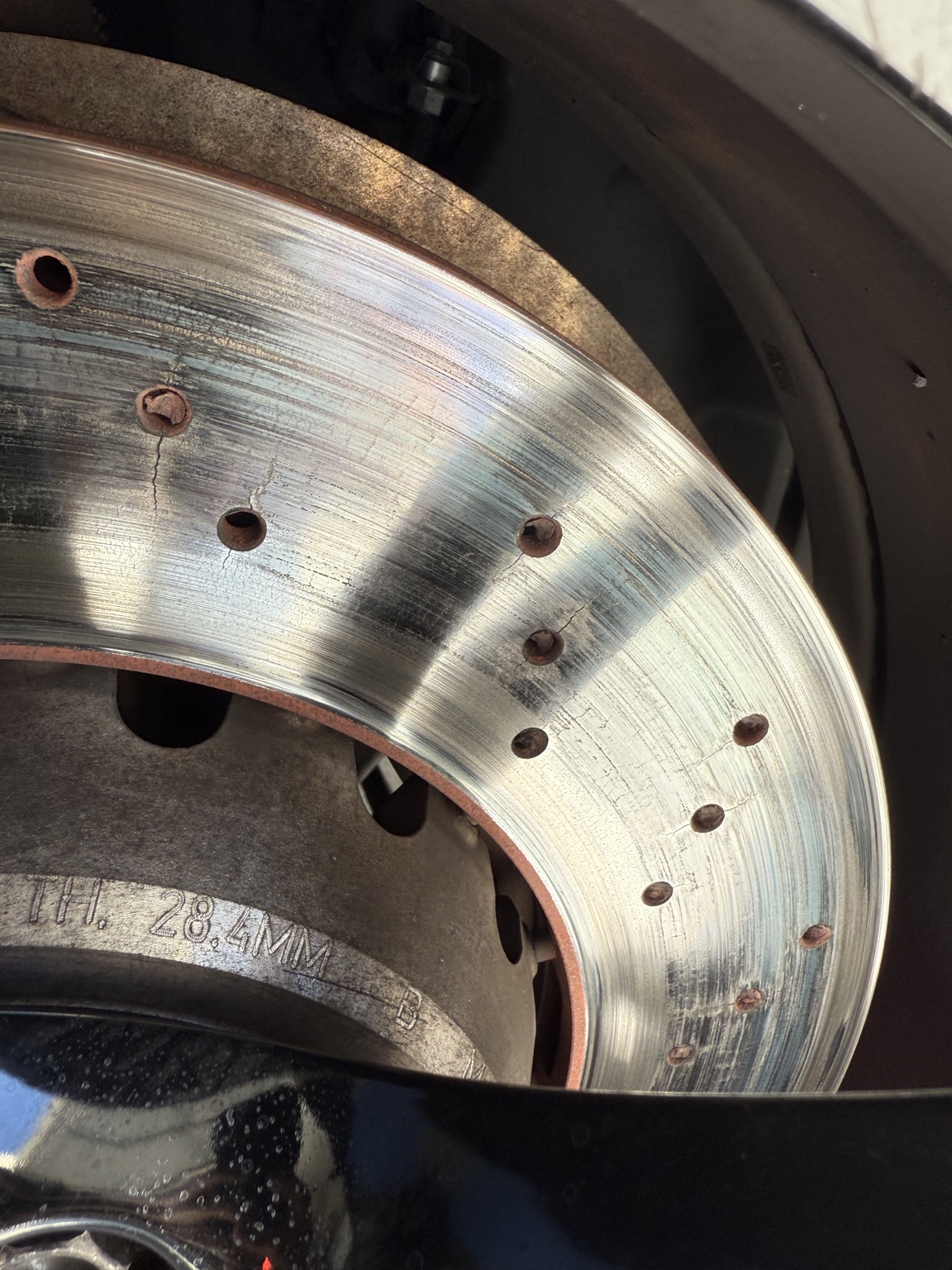
We also look at the condition of the surface the new pads will contact. Heavy rust, deep grooves, a pronounced wear lip, or suspected cracks can make a rotor a poor candidate for reuse and contribute to noise after new pads are installed. The close-up from our shop shows lines extending from several drilled holes. A photograph alone does not establish the rotor’s condition, so we inspect and measure it before making a recommendation. On a Porsche with Porsche Ceramic Composite Brakes (PCCB), we assess chips and other damage using the inspection criteria for that brake system.
What Fox Motors checks before quoting brakes
We ask when the noise occurs, inspect the pads and rotors, and verify the symptom on a road test when appropriate. If we recommend rotors along with pads, we’ll explain the reason and show you what we found. That might be a thickness measurement, visible surface damage, or a measurement that helps explain a pulsation you feel through the pedal.
When you book, tell us whether the noise happens cold or warm, under light or firm braking, or after recent brake work. Mention any pulsation, shaking, or grinding. Those details help us check the conditions that brought you in.
Call Fox Motors in Tampa at 813-665-1647 or text 813-588-6989 to schedule a Porsche brake inspection. Porsche brake services